
November 2026 cohort
Trauma-Informed Psychological Interventions · 21 hours, live online
Dates: 13, 14, 16, 17, 20, 21 & 24 November 2026
Time: 6:00 to 9:00 PM IST, live online
Fees (early bird until 3 November): Students ₹7,000, Professionals ₹8,000
Regular fees: Students ₹8,000, Professionals ₹9,000
Who can attend: professionals with at least a postgraduate degree in Psychology, Psychiatry or Psychiatric Social Work. Active clinical practice is needed to gain the most from the training.
Facilitator: Syam K Ravindran, RCI-registered Clinical Psychologist, trainer and supervisor at CORE.
Reserve your place
Seven live evenings in a small, supportive group. Early-bird fees close on 3 November.
21-hours (virtual) Trauma-informed training
What will I learn?
- Introduction to Trauma-Informed Care and compatible frameworks with real client examples
- Different types of trauma and clinical signs for effective implementation of Trauma-Informed Practice (neurobiological perspective, PTSD)
- Understanding Complex PTSD and clinical signs for effective implementation (neurobiological perspective, Complex PTSD)
- Trans-diagnostic understanding of trauma: manifestation across axis one and axis two disorders, leading to misdiagnosis
- Exploring Trauma Beyond Adverse Childhood Experiences (ACE)
- Integrating attachment framework for understanding trauma..
- Development of emotional and attachment systems in early formative years
- Experiential understanding of gauging client’s ego-strength -Framework for application in trauma-focused interventions
- Understanding trauma adaptations using the window of tolerance and clinical application
- Incompatibility of extrapolating evidence-based Practices for PTSD to complex PTSD clients.
- Sequencing psychotherapy and Phase-based approach for clients with chronic traumatization
- Importance of Ego-State Therapies in addressing dissociation
- Differentiating habituation-based therapy models from Trauma-Processing models in trauma treatment
- Overview of promising ego-strengthening and emotional processing models

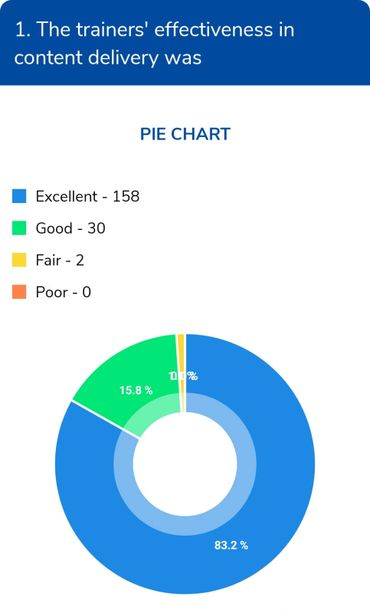
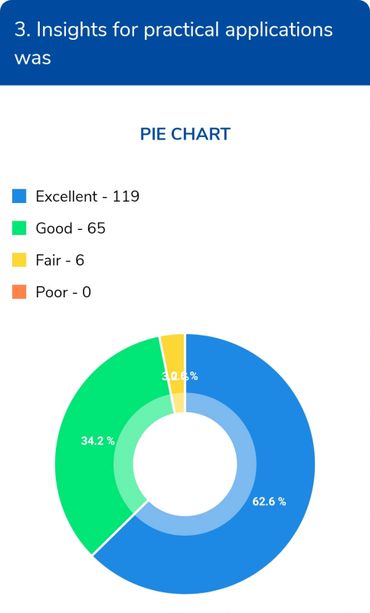
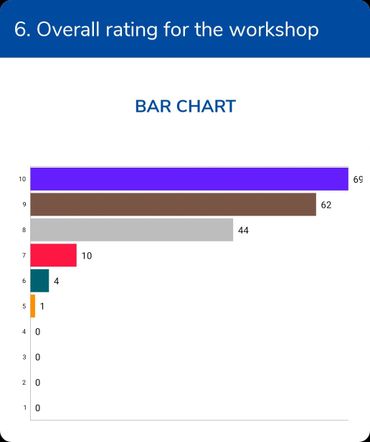
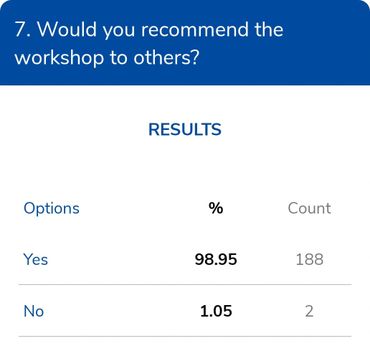
Feedback from previous batch professionals


How useful the clinical professionals found this training?

About the facilitator

Syam K Ravindran
Syam K Ravindran is a Consultant Clinical Psychologist, trainer, and supervisor with over 15 years of experience in clinical practice, teaching, and professional development. He is currently associated with Connect & Restore (CORE), India, where his work focuses on trauma-informed psychological interventions, clinical consultation, and professional training.
Previously, he spent a decade at Manipal Academy of Higher Education (MAHE) as part of the Department of Clinical Psychology, where he was actively involved in patient care, teaching, and supervising postgraduate clinical psychology trainees.
His clinical approach is trauma-informed and integrative, drawing from modalities such as EMDR, Emotionally Focused Therapy (EFT), Acceptance and Commitment Therapy (ACT), Motivational Interviewing (MI), Accelerated Experiential Dynamic Psychotherapy (AEDP), and Cognitive Behaviour Therapy (CBT). He has a particular interest in working with emerging adults and individuals impacted by developmental and relational trauma.
Alongside clinical work, he regularly conducts professional training programs and provides clinical supervision to mental health professionals. Supervision is extended to clinicians who have completed the Trauma-Informed Training and Emotionally Focused Therapy (EFT) training with Connect & Restore (CORE), with an emphasis on safe, phase-oriented, and relationally attuned trauma care.
He is Consultant & Trainer in Training of the EMDR India training team and is involved in conducting EMDR basic training for mental health professional in India.
He is a professional life member of the Indian Association of Clinical Psychologists (IACP), Clinical Psychology Society of India (CPSI) and EMDR Association, India.